
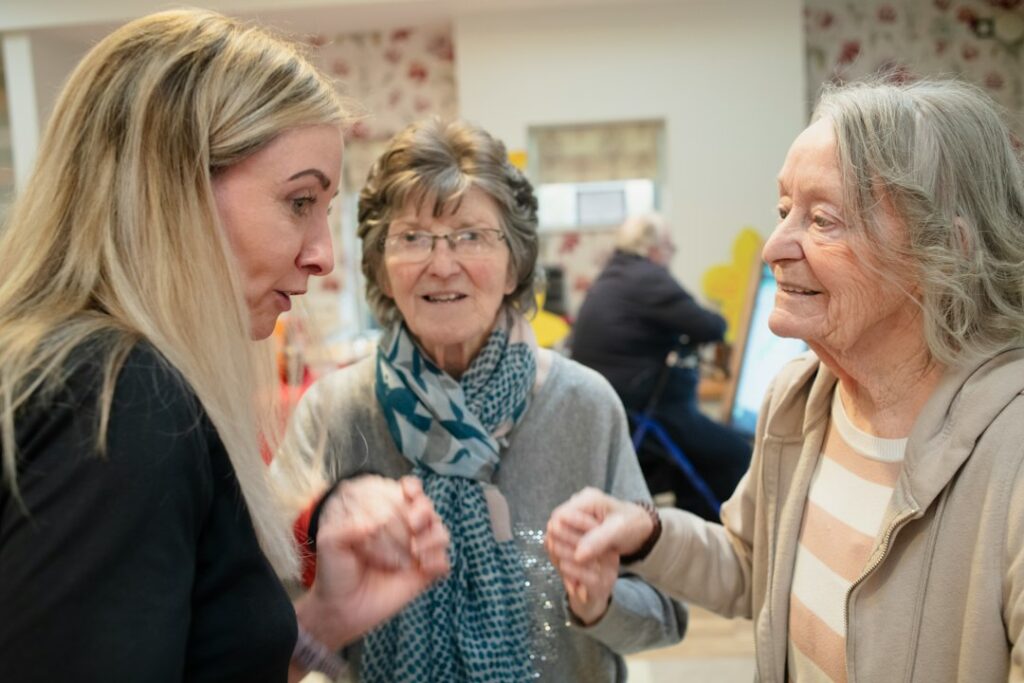
What role do volunteers play in assisted living?
Volunteers help strengthen the social, emotional, and everyday experience of assisted living residents. They may spend time talking with residents, assist with activities, share a skill, read aloud, provide companionship, or help create a stronger connection between the community and the surrounding area.
Their contribution is usually designed to complement, not replace, the work of paid staff. Employees remain responsible for health care, personal care, medication assistance, supervision, transportation arrangements, and other duties that require training or authorization. Volunteers add time, attention, creativity, and personal connection.
For residents and families in Indiana, PA, volunteering can also help preserve familiar community ties. A volunteer may bring knowledge of local traditions, seasonal routines, neighborhood history, music, crafts, or community events that feel meaningful to older adults.
What do volunteers typically do?
Volunteer responsibilities vary according to the person’s abilities, interests, age, training, and the community’s policies. Common roles include:
- Visiting residents who may appreciate conversation or companionship
- Reading newspapers, books, letters, or magazines aloud
- Playing cards, board games, puzzles, or simple tabletop activities
- Helping with arts, crafts, music, gardening, or reminiscence programs
- Assisting with holiday decorations and seasonal gatherings
- Accompanying residents to approved group activities
- Writing letters, organizing photographs, or helping with life-story projects
- Sharing a hobby such as knitting, painting, singing, cooking demonstrations, or genealogy
- Helping residents use familiar technology for video calls or viewing photographs
- Supporting intergenerational programs involving students or youth groups
A volunteer may also provide practical encouragement during an activity. For example, a resident who is hesitant to join a group may feel more comfortable if someone offers to sit nearby, explain the activity, or participate alongside them.
Can volunteers provide personal care or medical assistance?
Generally, volunteers should not perform tasks that require clinical judgment, personal-care training, or access to private health information. Medication administration, transfers, bathing, toileting, wound care, injections, feeding assistance, and handling medical equipment typically belong to trained and authorized staff.
The exact boundaries depend on the assisted living community’s policies, applicable regulations, and the volunteer’s training. A volunteer should never lift or transfer a resident unless specifically trained and authorized to do so. Even well-intended physical assistance can cause injury to the resident or the volunteer.
A volunteer who notices a change in a resident’s condition should report the concern to staff rather than attempting to diagnose or treat it. Examples include unusual confusion, a fall, sudden weakness, difficulty breathing, signs of illness, or a resident who appears distressed.
How do volunteers benefit residents?
The most direct benefit is meaningful human interaction. Residents may have fewer opportunities to socialize after moving from a private home, especially if family members live far away or have demanding work and caregiving responsibilities. Regular visits can reduce isolation and give residents something familiar to anticipate.
Volunteers may also support:
- Conversation and self-expression
- Confidence in trying new activities
- Mental stimulation through games, reading, and discussion
- Physical movement through supervised activities or walks where permitted
- Emotional comfort during changes in health, routine, or living arrangements
- A stronger sense of purpose and belonging
The value of a visit is not measured only by how much was accomplished. A quiet conversation, listening to music, looking through family photographs, or sharing memories may be more meaningful than completing a planned task.
What should volunteers understand about dementia and memory loss?
Volunteers do not need to be experts in dementia to be helpful, but they should receive appropriate orientation. A calm tone, simple questions, patience, and flexibility are often more effective than correcting every inaccurate statement.
Helpful approaches include:
- Introduce yourself each time if the resident may not remember you
- Use short, clear sentences
- Allow extra time for responses
- Focus on feelings rather than arguing about facts
- Offer limited choices instead of broad or complicated questions
- Redirect gently if a conversation becomes upsetting
- Avoid quizzing a resident about names, dates, or events
- Report significant changes in mood, behavior, or functioning to staff
A resident may repeat a story or ask the same question several times. This is not necessarily a sign that the person is being difficult. Repetition can reflect memory changes, anxiety, loneliness, or a desire for connection.
What training and screening should volunteers receive?
A responsible volunteer program usually includes an orientation before the person begins visiting residents. Topics may include confidentiality, boundaries, emergency procedures, infection prevention, fall awareness, respectful communication, abuse prevention, and rules about photographs or social media.

Some programs may require background checks, health documentation, references, age restrictions, or additional training for volunteers working with residents who have cognitive impairment. Requirements can vary according to the setting and the type of activity.
Volunteers should know whom to contact if a resident falls, becomes ill, reports mistreatment, requests something outside the volunteer’s role, or appears to be missing from an expected activity. Clear reporting procedures protect both residents and volunteers.
How can volunteers protect residents’ privacy and dignity?
Respect for privacy is essential. Volunteers should not discuss a resident’s diagnosis, family situation, finances, behavior, or personal history with others. Conversations in hallways, elevators, vehicles, and public settings can easily be overheard.
Residents should also have control over whether they participate. A person may decline a visit, activity, photograph, conversation, or religious discussion. Volunteers should accept the decision without pressure.
Other useful boundaries include:
- Do not borrow money from residents or lend money to them
- Do not accept expensive gifts or become involved in financial decisions
- Do not share personal contact information without following community policy
- Do not post resident photographs or stories online without documented permission
- Do not promise to keep safety concerns secret
- Do not make promises about visits that may not be kept
Maintaining boundaries does not make a relationship impersonal. It helps keep the relationship safe, consistent, and centered on the resident’s well-being.
What seasonal issues matter in Indiana, PA?
Weather and seasonal conditions can affect volunteer activities. Winter ice, snow, and reduced daylight may make outdoor visits or transportation more difficult. Volunteers should follow the community’s guidance about cancellations, appropriate footwear, and safe walking areas.
During cold weather, indoor activities such as music, crafts, games, reading groups, and reminiscence programs may be more practical. In warmer months, outdoor visits may be possible when shade, hydration, rest periods, and safe surfaces are available.
Seasonal illness precautions may also change. Volunteers should avoid visiting when experiencing contagious symptoms and follow current infection-control rules, including any masking, hand hygiene, or screening procedures required by the community.
How can families evaluate a volunteer program?
Families may ask how volunteers are selected, trained, supervised, and matched with residents. Useful questions include:
- What duties are volunteers allowed to perform?
- Are background checks or references required?
- How are privacy and safeguarding taught?
- Who supervises volunteers?
- How are concerns or incidents reported?
- Are volunteers matched according to interests, communication style, or needs?
- What happens if a regular volunteer stops coming?
- Can residents decline or change a volunteer assignment?
A well-organized program treats volunteering as a structured part of community life. It gives volunteers clear expectations while allowing residents to remain in control of their participation.
Volunteers can offer something paid services cannot always provide: unhurried attention from someone who chooses to be present. With appropriate training, boundaries, and staff coordination, that presence can make daily life more connected, familiar, and personally meaningful for assisted living residents.
